Posts

Showing posts with the label stud welder

What is stud welding, and its advantages?
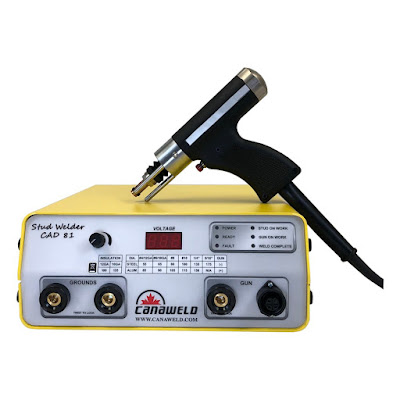
Image
Stud welding is a single-sided fastening method that connects a metal part to another metal component, typically a metal sheet called the parent material. A strong arc of electricity created by a positive electric current is used to fuse parts together.  Both metals reach their melting points as a result of the arc's heat. The part and the parent material are pressed together to form a secure joining and become one once a molten pool has formed. Here are some of the advantages of stud welding: 1. Adaptable.  A stud welder is suitable for a wide range of metals and stud sizes. If the right equipment is used, stainless steel, mild steel, aluminium, copper, and brass can be stud welded effectively. If you have the right attachments and equipment, you can use threaded, unthreaded, or internally threaded studs with diameters ranging from 1 to 25 mm. 2. Accessible.  Workers don't have to twist and turn themselves to make a good weld with stud welding. They only require access...

5 Undisputable Reasons for Using Stud Welding Method in Vaughan

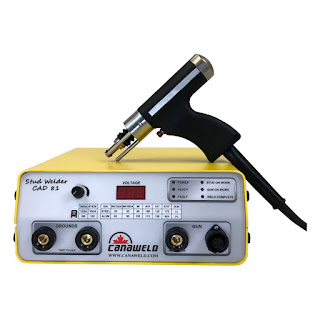
Image
Stud welding is an electric arc welding technique in which a fastener or a specifically shaped nut is welded to another metal element, typically a metal foundation. Steel, stainless steel, and aluminum are among the metals that can be used for the fastener/nut and the base. Weld nuts have a flange with little nubs that melt together to generate the weld.  By heating both components with an arc, the fastener or metal stud is bonded to the metal base. For a number of applications, a stud welder enables optimal weld penetration and dependability. The arc is created using a DC power supply. Streamlined Design: As stud welding is a one-sided procedure. Because no holes are required, a stud welder can be secured without causing damage to the structure. Compared to previous ways, this produces a considerably cleaner design. Strength: The fusion of the two welded metals results in a weld that is stronger than either of the metal pieces alone. This makes it resistant to breaking and losin...

Stud Welding: Advantages and Methods

Image
Stud welding is a fastening process in which fasteners, which are referred to as weld studs, are used. Weld studs are available in a variety of shapes, sizes and designs. Stud welding has much in common with flash welding process in which a fastener or a customized nut is merged into another metallic component. Before stud welding was discovered, drilling and tapping processes were excruciatingly slow. It has made several processes in industrial units much easier.  One of the biggest advantages of stud welding is that it helps you save up on a lot of time and money as it does not require any drilling, punching, screwing and finishing processes. Even the most basic studs display a lot of strength and can be used on extremely thin plates. The amount of money spent on stud welding is very little and it gives you very good results. When it comes to stud welding, there are two methods you can choose from, arc stud welding process and capacitor discharge stud welding process. Arc stud we...